Can An Electric Oven Blow Up . Leave the door closed throwing open the oven door feeds oxygen to flames inside. Sparks blew everywhere, a big puff of smoke, the electricity flickered off and back on in the house and it smelled a little like firecrackers. Microwave Not Working Fuse is blown Appliance Express from applianceexpresstx.com While some of our members had a speedy and sympathetic response, others were left without an oven for weeks, and ended up having to foot costly repair bills of more than £200. Oven doors can explode without warning and send glass flying across your kitchen. This just means that you should preheat for longer than you (or your oven) might think you should.
Why Are Equipotential Lines Perpendicular To Electric Field
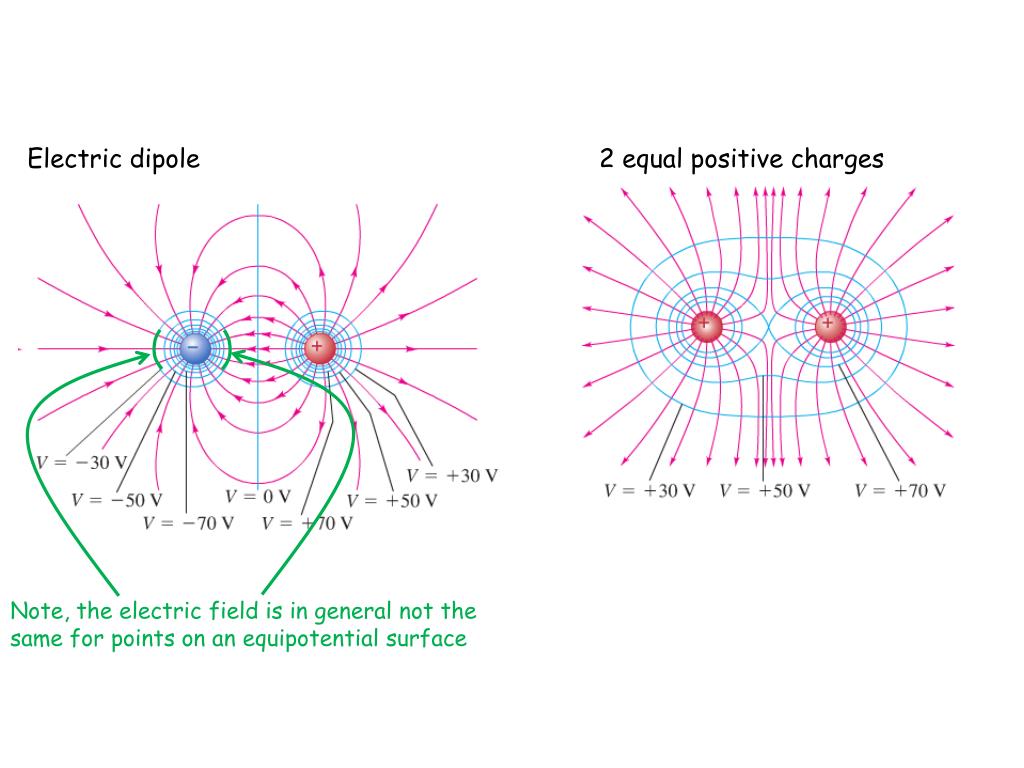
Why Are Equipotential Lines Perpendicular To Electric Field. Therefore, the electric field is perpendicular to the equipotential surface. This is because there is no potential gradient along any direction parallel to the surface , and so no electric field parallel to the surface.
PPT Equipotential surfaces and field lines PowerPoint Presentation from www.slideserve.com
Equipotential surface by definition means surface having same potential, which means no work is required to move the charge along the surface. About press copyright contact us creators advertise developers terms privacy policy & safety how youtube works test new features press copyright contact us creators. Why are the equipotential lines near conductor surfaces parallel to the surface and why perpendicular to the insulator surface mapped?
This Is Because If The Electric Field Is Not.
Why equipotential surface are always perpendicular to electric field? Charged surfaces are linked by an electric field, which is represented by lines of force that are perpendicular to the charged surfaces. It means, the electric field intensity is perpendicular to equipotential surface.
Since The Electric Field Lines Are Directed Radially Away From The Charge, Hence They Are Opposite To The Equipotential Lines.
Now to answer this, we know that if electric field lines were to cross, then they'd have to be a charge at the crossing point. W = −δpe = −qδv = 0. Equipotential surface by definition means surface having same potential, which means no work is required to move the charge along the surface.
Both Floor 2 And Floor 3 Are Perpendicular To The Way You Get From Floor To Floor, Which Is Using The Elevator.
Equipotential lines surround a charge radially. Equipotential lines are perpendicular to electric field lines in every case. Similar thing for electric field lines and potentials.
About Press Copyright Contact Us Creators Advertise Developers Terms Privacy Policy & Safety How Youtube Works Test New Features Press Copyright Contact Us Creators.
This means qe⋅δs = 0, but q, e, and δs are assumed to be nonzero. Since the electric field lines are directed radially away from the charge, hence they are opposite to the equipotential lines. Note that in the above equation, e and f symbolize the magnitudes of the electric field strength and force, respectively.
Because The Electrons Are Trying To Stay As Far Away From Each Other As Possible (Like Repels Like) Imagine A Ball With Strips Of Paper Attached To It.
This is because there is no potential gradient along any direction parallel to the surface , and so no electric field parallel to the surface. Since the electric field lines point radially away from the charge, they are perpendicular to the equipotential lines. No work is done in moving a charge from one point on equipotential surface to the other.


Comments
Post a Comment